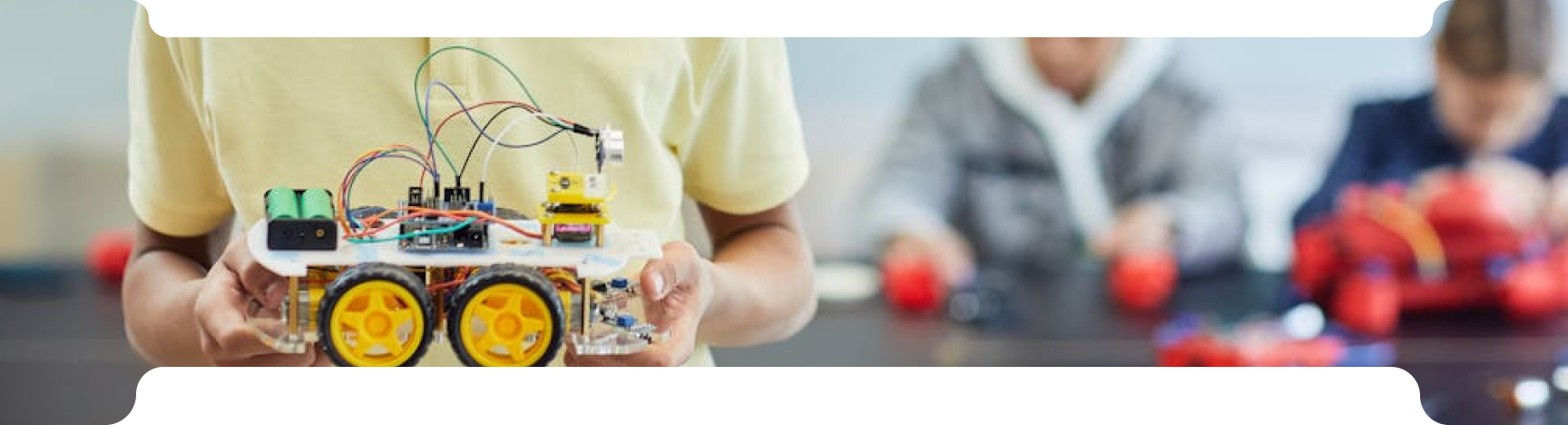
Robotics solutions are designed to inspire innovation and build practical skills in automation, coding, and engineering. These platforms provide immersive learning experiences that combine theoretical knowledge with hands-on experimentation. Suitable for a wide range of users—from students to researchers—our robotics products bridge the gap between classroom concepts and real-world applications. By integrating programmable hardware, sensor technologies, and supportive simulation tools, learners develop the problem-solving abilities and technical fluency necessary for success in future-focused industries.
0.1
Ground Robotics
Ground robotics systems introduce learners to the mechanics and logic of mobile autonomous systems.
These platforms promote project-based learning, enabling users to build, program, and test ground-based robotic vehicles. Equipped with sensors for obstacle detection and navigation, they offer practical insights into key concepts such as path planning, locomotion, and control systems. Applications simulate real-world scenarios like warehouse automation, agricultural robotics, and disaster response, making them ideal for engineering programs and STEM curricula focused on robotics innovation and system design.
0.2
Aerial Robotics
Aerial robotics platforms bring drone technology into classrooms and labs, allowing learners to explore UAV design, flight control, and data collection techniques.
These systems often include GPS modules, gyroscopic stabilization, onboard cameras, and remote-control features for both manual and autonomous flight. Targeted at fields like logistics, environmental monitoring, and emergency services, aerial robotics products teach integration of software and hardware to address complex challenges. Real-world simulations such as search-and-rescue missions and land surveys offer hands-on experience with this rapidly growing technology.
0.3
Underwater Robotics
Underwater robotics systems provide opportunities to explore marine environments through remotely operated vehicles (ROVs).
Designed for educational and research applications, these platforms simulate underwater missions such as inspection, exploration, and environmental data collection. Equipped with waterproof enclosures, thrusters, cameras, and sensors for depth and temperature, they offer practical training in underwater navigation and robotics control. These systems are ideal for marine engineering, biology, and environmental science programs, fostering understanding of aquatic ecosystems while building core competencies in robotics assembly, mechanics, and sensor integration.